If your vehicle won’t start because of a dead car battery, you can often get it running again by jump-starting it. To jump-start a car, connect jumper cables between the flat battery and a working battery in the correct order, start the donor vehicle, then start the car with the dead battery.
Flat batteries are one of the most common causes of vehicle breakdowns. It can happen after leaving lights on, during colder weather, or when a battery is reaching the end of its life. Understanding how to jump-start a car safely can help you get back on the road quickly.
At Fast Sydney Towing, we assist drivers across Sydney with flat batteries and breakdowns every day. This guide explains how to recognise a flat battery, use jumper cables safely, and restart your vehicle step by step.
The Key Steps to Jump-Start a Car
- A jump-start uses another battery or a jump starter to provide temporary power to a vehicle with a dead car battery.
- Jumper cables must be connected in the correct order to avoid sparks or electrical damage.
- Both vehicles should be parked safely with engines switched off before connecting cables.
- Start the working vehicle first before attempting to start the vehicle with the flat battery.
- Remove jumper cables in reverse order after the vehicle starts.
- Drive the vehicle for about 20–30 minutes to allow the alternator to recharge the battery.
What Is a Jump-Start?
A jump-start is a method used to restart a vehicle when the battery does not have enough power to turn the engine over. When a dead car battery cannot deliver the electrical surge needed to start the engine, power can be supplied from another battery.
This power typically comes from another vehicle using jumper cables or from a portable jump starter. When connected correctly, the working battery provides enough electrical current for the starter motor to crank the engine.
Once the engine starts, the vehicle’s alternator begins generating electricity and gradually recharges the battery while the engine runs.
Understanding how to jump-start a car correctly is important because incorrect connections can damage vehicle electronics or create sparks near the battery.
Signs of a Dead Car Battery
A battery that is losing power usually shows clear warning signs before it fails completely.
Drivers often notice symptoms when attempting to start the engine.
| Symptom | What It Usually Means |
|---|---|
| The engine cranks slowly | The battery charge is too low to start the engine properly |
| Clicking sound when starting | The starter motor is not receiving enough power |
| Dashboard lights work, but the engine will not start | The battery has a limited charge, but cannot start the engine |
| Electrical accessories work, but the car will not start | A battery cannot supply the high current needed to crank the engine |
If these signs appear, the battery may simply need recharging. In many cases, the quickest solution is to jump-start a car using jumper cables or a portable jump starter.
If the battery repeatedly goes flat or the vehicle still will not start after a jump-start, the battery may need replacement.
The Necessary Equipment
Before attempting to jump-start a car, make sure you have the correct equipment. Using the proper tools helps ensure the process is safe and prevents damage to the battery or electrical system.
Most drivers will need two items:
- Jumper cables
- Another vehicle with a working battery or a portable jump starter
Jumper cables are heavy electrical leads with insulated clamps on each end. They allow electricity to safely transfer between batteries.
Learning how to use jumper cables is important because the clamps must connect to the correct battery terminals. The clamps are colour-coded to reduce confusion. Red clamps connect to positive terminals, while black clamps connect to the negative side and a grounding point.
Portable jump starters are another useful option. These compact battery packs allow drivers to restart a vehicle without another car and are often kept in vehicles for emergencies.
If the correct equipment is not available or the driver is unsure about the process, roadside assistance may be the safer option.
Safety Checks Before Proceeding
Jump-starting is generally safe when performed correctly, but drivers should carry out a few checks before connecting anything to the battery.
Start by inspecting the battery itself. If the casing is cracked, leaking fluid, or heavily corroded, the battery should not be jump-started.
Drivers should also confirm that both vehicles use compatible battery systems. Most passenger vehicles use a 12-volt battery, which makes them suitable for jump-starting.
Jumper cables should also be checked for damage. Exposed wiring or damaged insulation can increase the risk of electrical problems.
- Ensure both engines are switched off before connecting cables
- Keep jumper cable clamps from touching each other
- Keep cables clear of belts, fans, and moving engine parts
If the battery appears frozen or damaged, it is best to contact roadside assistance rather than attempting to restart the vehicle.
Jump-Starting a Car Step-by-Step
Learning how to jump-start a car involves several simple steps, including positioning the vehicles correctly, connecting the jumper cables in the right order, starting the engines safely, and removing the cables properly once the battery has enough charge.
If the battery appears frozen or damaged, it is best to contact roadside assistance rather than attempting to restart the vehicle.
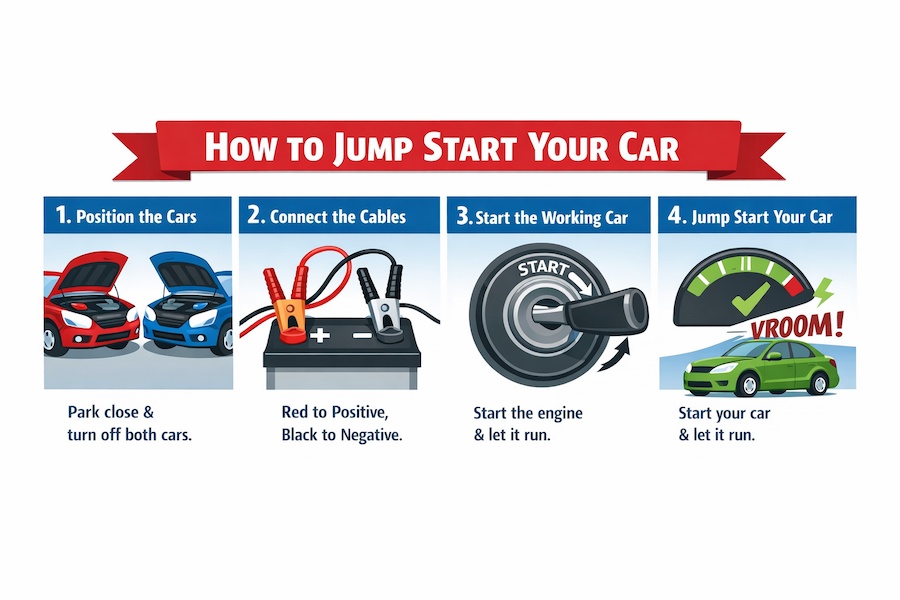
Positioning the Vehicles
Park the working vehicle close enough for the jumper cables to reach both batteries. Depending on the vehicle layout, the cars may face each other or be parked side by side. 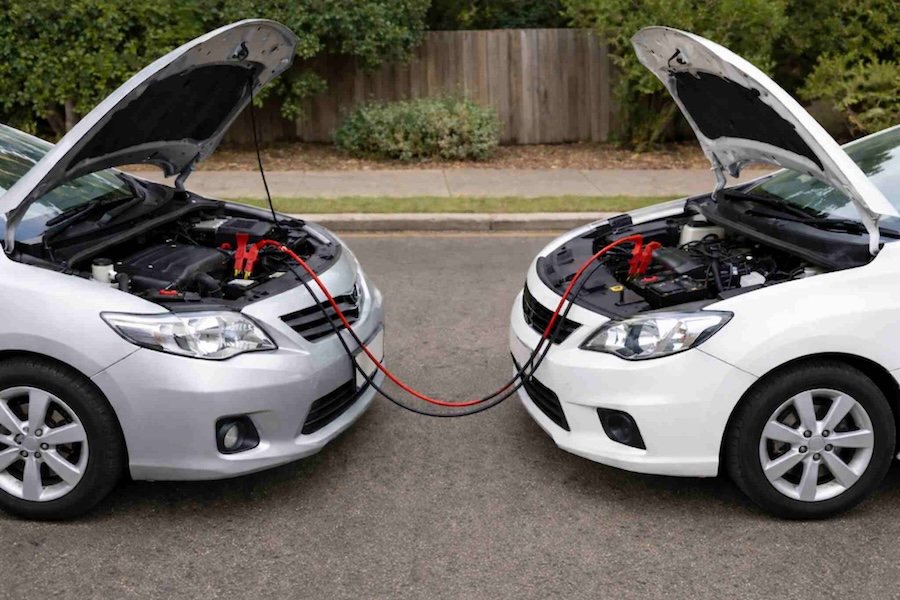
The vehicles should never touch each other. Physical contact can create an unintended electrical connection.
Once positioned, both engines should be switched off. Automatic vehicles should be placed in Park, while manual vehicles should be in Neutral. Apply the handbrake to both vehicles.
Open the bonnets and locate the battery terminals. In some modern vehicles, the battery may be under a protective cover or located elsewhere, but most vehicles provide designated jump-start points.
Taking a moment to prepare properly helps prevent mistakes when connecting the cables.
How to Connect Jumper Cables Correctly
Connecting the jumper cables in the correct order is essential when learning how to jump-start a car.
- Connect the red clamp to the positive terminal of the dead car battery
- Connect the other red clamp to the positive terminal of the working battery
- Connect the black clamp to the negative terminal of the working battery
- Connect the final black clamp to an unpainted metal surface on the engine or chassis of the vehicle with the flat battery
The final clamp should not be attached directly to the negative terminal of the flat battery. Using a metal grounding point helps reduce the risk of sparks near the battery.
Before starting either vehicle, confirm that the cables are secure and not touching moving engine components. 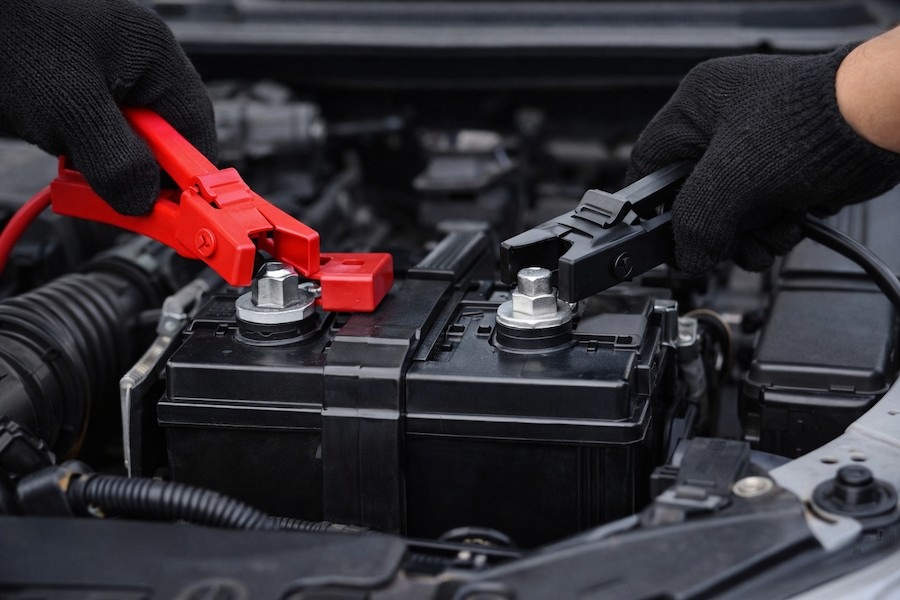
Starting the Vehicles
Once the cables are connected, start the vehicle with the working battery first.
Allow the donor vehicle to run for a few minutes. This allows electrical current to flow into the flat battery.
After a short period, attempt to start the vehicle with the dead car battery.
If the engine starts successfully, allow both vehicles to continue running briefly before removing the cables.
How to Remove the Jumper Cables Safely
- Remove the black clamp from the grounded metal surface
- Remove the black clamp from the working battery
- Remove the red clamp from the working battery
- Remove the red clamp from the restarted vehicle
Take care not to allow the clamps to touch each other while removing them.
What to Do After Jump-Starting the Car
If the vehicle starts successfully, the battery will need time to recharge.
To help restore the battery, drive the vehicle for around 20 to 30 minutes if possible.
Common Mistakes To Watch Out For
Jump-starting a car is usually straightforward, but simple mistakes can cause sparks, damage vehicle electronics, or prevent the engine from starting. Knowing what to avoid helps ensure the process is safe and effective.
The table below highlights some of the most common jump-start mistakes and why they can cause problems.
| Mistake | Why It’s a Problem |
|---|---|
| Connecting cables in the wrong order | The positive cables should be connected first, followed by the negative. Incorrect order can cause sparks and may damage vehicle electronics. |
| Attaching the final negative clamp to the battery | The last negative clamp should be connected to an unpainted metal surface on the engine or chassis, not the flat battery. This reduces the risk of sparks near the battery. |
| Letting the clamps touch each other | If the clamps touch while connected, it can create a short circuit. |
| Jump-starting a damaged battery | A cracked, leaking, or heavily corroded battery can be dangerous. It is safer to call roadside assistance. |
Alternative Methods to Jump-Start a Car
Portable jump starters are a convenient option. These small battery packs can provide enough power to start a vehicle without another car.
Push starting may also be possible in manual transmission vehicles, although this method does not work with automatic vehicles.
Can You Jump-Start an Electric Vehicle?
Fully electric vehicles (EVs) cannot be jump-started in the same way as petrol or diesel cars. EVs do not rely on a traditional starter motor powered by the main battery to start the engine.
Charging WA shares that at the heart of EVs is a large high-voltage battery system that requires professionally trained technicians to access. This battery cannot be jump-started using jumper cables.
However, many electric vehicles still have a 12-volt auxiliary battery. This smaller battery powers basic systems such as interior electronics, lighting, and the vehicle’s computer systems. If this battery becomes flat, the vehicle may not start or may not allow the high-voltage battery system to activate.
In some situations, it may be possible to restore power by jump-starting the 12-volt battery only, following the vehicle manufacturer’s instructions. EVs often have designated jump-start points rather than traditional battery terminals.
Because electric vehicles contain high-voltage systems, drivers should never attempt to access or jump-start the main battery. If an EV will not start or displays warning messages, professional roadside assistance is usually the safest option.
When to Call Roadside Assistance
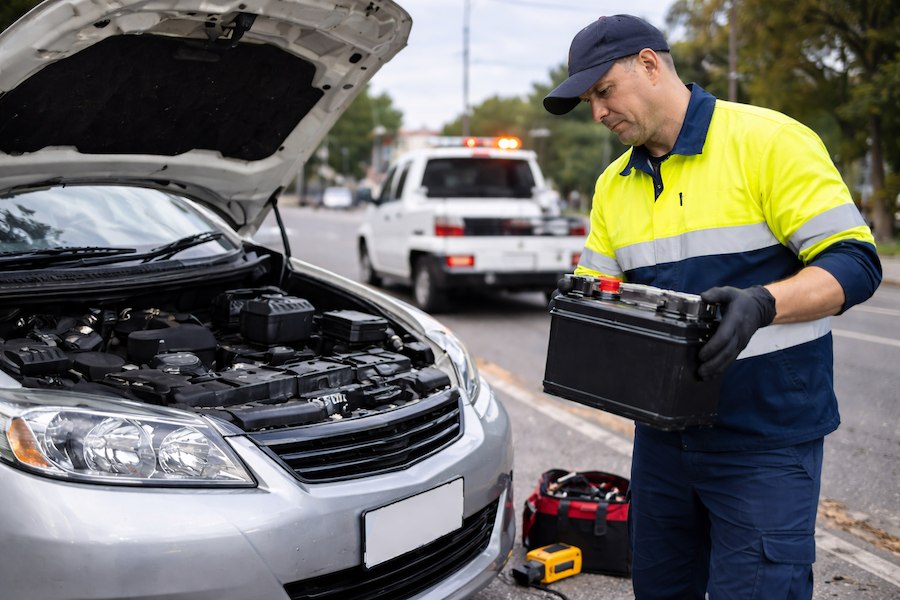
Jump-starting a car can often be the solution, but there are situations where it is safer to call for professional help. Some battery problems can indicate deeper electrical issues or physical damage. If you notice any of the signs below, seek jump-start assistance first, then let the professionals further diagnose the situation.
- The battery is leaking or visibly damaged
- The vehicle repeatedly develops a dead car battery
- The engine will not start after several attempts
- The driver is unsure how to use jumper cables safely
Getting Back On the Road
A flat battery is one of the most common vehicle problems drivers face. Knowing how to jump-start a car allows you to deal with a dead car battery quickly and safely when it happens.
The process involves preparing both vehicles correctly, connecting jumper cables in the proper order, and allowing the battery to recharge once the engine starts.
If your vehicle still will not start or the battery repeatedly fails, professional help may be required. Fast Sydney Towing provides fast, reliable roadside assistance across Sydney, available 24/7.