Being involved in a car accident can be stressful and confusing. Knowing the correct steps to take post-car accident helps protect your safety, ensures the situation is handled properly, and makes the insurance process easier later.
This guide explains what to do after a car accident and outlines the key steps drivers should follow immediately after a collision.
Quick Post-Car Accident Checklist
If you are unsure what to do in a car accident, the following checklist summarises the most important steps.
- Check for injuries and call emergency services if required
- Move vehicles to a safe location if possible
- Exchange details with other drivers
- Document the accident scene with photos
- Assess whether the vehicle can be driven safely
- Arrange towing if the vehicle is unsafe to drive
- Seek medical attention after the accident
- Contact your insurance provider
Following these steps post-car accident helps keep everyone safe and ensures you have the information needed for insurance claims and accident reporting.
Step 1: Check For Injuries
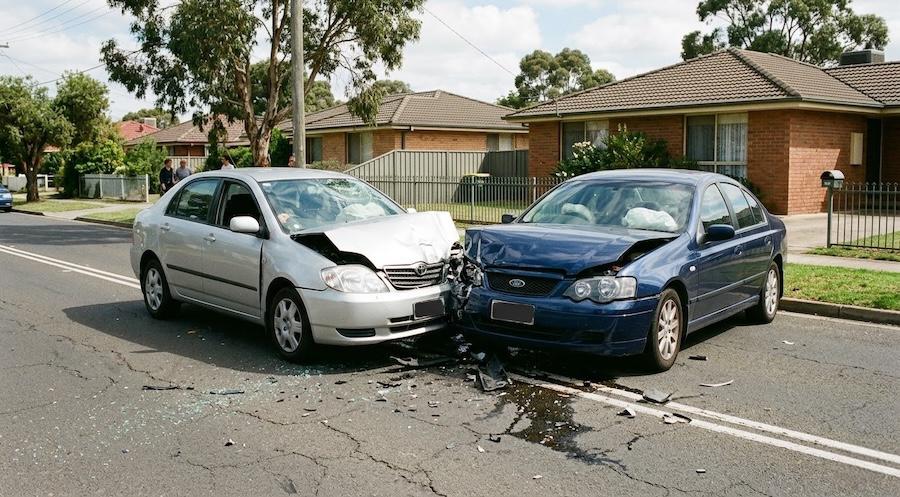
The first priority after any collision is safety. If you are unsure what to do after a car accident, start by checking whether anyone is injured.
Check yourself, your passengers, and anyone else involved in the accident. Some injuries may not be immediately obvious, so take a moment to make sure everyone is okay.
Call emergency services immediately if:
- Someone is injured
- A person is trapped inside a vehicle
- There is a risk of fire or serious vehicle damage
- Anyone appears unconscious or disoriented
If someone is seriously injured, avoid moving them unless necessary and wait for medical professionals to arrive.
When To Call the Police After a Car Accident
Many drivers are unsure when police need to attend an accident scene. In some situations, contacting the police is required or recommended.
- A driver leaves the scene
- There is significant damage to vehicles or property
- Drivers cannot exchange details safely
- A vehicle is blocking traffic in a dangerous location
Police can secure the area, manage traffic, and ensure the accident is properly recorded. In more serious collisions, a police report may be required when lodging an insurance claim.
Step 2: Move Vehicles To A Safe Location
If the vehicles are creating a hazard and it is safe to do so, move them to the side of the road or a nearby safe area. Turn on hazard lights to warn other drivers and reduce the risk of another collision.
If the vehicle cannot be moved safely, leave it where it is and move yourself and passengers to a safe location away from traffic.
Step 3: Exchange Details With The Other Drivers
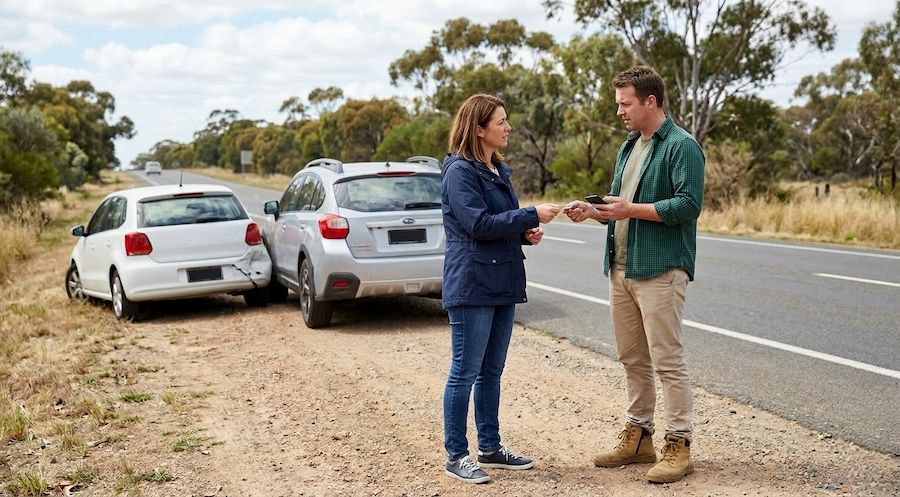
Once everyone is safe, the next step post-car accident is exchanging information with the other drivers involved as required by Transport NSW.
You should collect the following details:
- Name and contact details
- Driver’s licence number
- Vehicle registration number
- Insurance provider and policy information
If there are witnesses nearby, it can also be helpful to collect their contact details.
Try to remain calm and avoid discussing fault at the scene. Insurance companies and authorities will determine responsibility later.
What To Do If The Other Driver Leaves The Scene
If another driver leaves the scene of the accident, it may be considered a hit-and-run incident. There are several steps you should take immediately.
First, try to remain calm and focus on gathering as much information as possible.
If you can safely do so, note details such as:
- The vehicle’s make, model, and colour
- The registration number (even a partial number can help)
- The direction the vehicle was travelling
-
The time and location of the accident
If there are witnesses nearby, ask if they saw the vehicle and request their contact details.
You should report the incident to the police as soon as possible. Providing clear information can help authorities locate the driver and may assist when lodging an insurance claim.
Documenting the accident scene with photos can also support your report and insurance claim.
Step 4: Document The Accident Scene
If it is safe to do so, documenting the accident scene is an important step after a car accident.
Helpful photos include:
- Damage to all vehicles involved
- The position of the vehicles
- Skid marks or debris on the road
- Nearby traffic signs or signals
- The surrounding area
This documentation can help insurance providers understand what happened and can speed up the claims process.
Step 5: Assess Whether The Vehicle Can Be Driven Safely
Some vehicles may appear drivable after a collision, but may have hidden damage. Steering, suspension, braking systems, and cooling components can all be affected by even a minor crash.
Tow truck operators frequently attend accident scenes where drivers initially attempted to drive away, only to experience steering problems or fluid leaks minutes later.
Signs a vehicle may not be safe to drive include:
- Steering pulling to one side
- Fluid is leaking underneath the vehicle
- Smoke or unusual smells
- Major body damage
- Dashboard warning lights
- Airbags deployed
If there is any doubt about the vehicle’s condition post-car accident, it is safer not to drive it.
Step 6: Arrange Towing If The Vehicle Cannot Be Driven
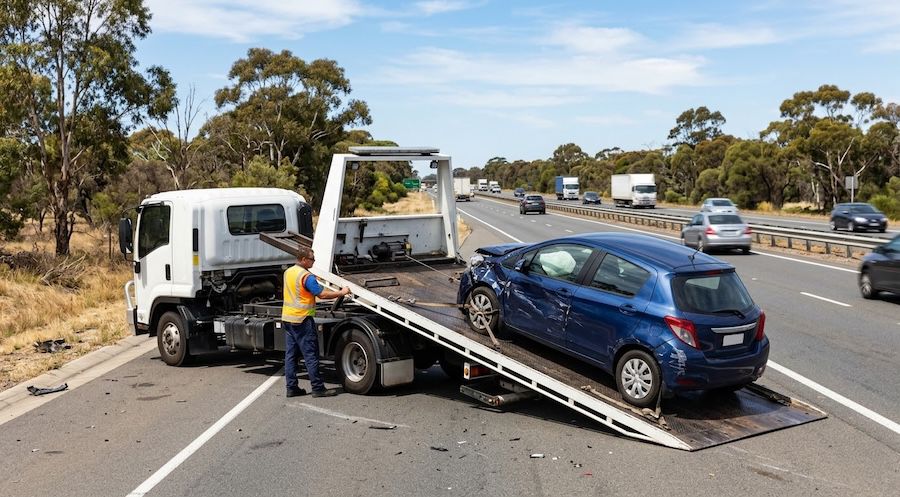
If the vehicle cannot be driven safely, arranging professional car towing is often the safest option.
Professional vehicle recovery helps:
- Prevent additional damage to the vehicle
- Remove hazards from the roadway
- Transport the vehicle safely to a repair facility
Experienced tow truck operators are trained to recover damaged vehicles safely from accident scenes and transport them without causing further damage.
Who Pays For Towing After A Car Accident
Many drivers are unsure who is responsible for towing costs after a car accident.
In most situations, the cost of accident towing may be covered by insurance, depending on your policy and the circumstances of the crash.
If another driver is found to be at fault, their insurer may cover the towing and repair costs. If the fault is unclear, you may initially need to arrange towing through your own insurance provider.
Tow truck operators can transport your vehicle safely to:
- A repair workshop
- Your home
- An insurance assessment facility
Step 7: Seek Medical Attention After The Accident
Some injuries may not appear immediately after a crash. Symptoms such as neck pain, headaches, dizziness, or stiffness may develop hours or even days later.
If you experience any unusual symptoms after a collision, seek medical advice as soon as possible.
Step 8: Contact Your Insurance Company
Another key step post-car accident is notifying your insurance provider.
Your insurer may request:
- Driver details from the other vehicle
- Photos of the accident
- A description of what happened
- A police report, if one was filed
Providing accurate information early can help reduce delays when processing the claim.
Common Mistakes Drivers Make After a Car Accident
Car accidents are stressful, and it is easy to overlook important steps. Knowing what mistakes to avoid can help protect your safety and simplify the insurance process.
- Leaving the scene without exchanging details
- Admitting fault before the accident is assessed
- Forgetting to document the accident scene
- Driving a vehicle that may not be safe to operate
- Delaying contact with the insurance provider
Handling a Post-Car Accident Situation
Knowing what to do after a car accident helps drivers manage a stressful situation more safely and confidently.
By following these steps post-car accident, checking for injuries, moving vehicles to safety, exchanging information, documenting the scene, assessing the vehicle, arranging towing if necessary, and contacting insurance, drivers can protect themselves and others involved.
Understanding what to do in a car accident can make a significant difference in how quickly and smoothly the situation is resolved.